This is not theory. Every lesson here is from real dealers, real customers, real consequences — 30 years of building Su-Kam from a ₹10,000 cable-TV workshop into a ₹1,200-crore brand. Here's what worked, what failed, and what became the playbook the Marketing Engine encodes.
1988 · Cable TV Era: Learning What Actually Sells
The setup: A small manufacturing unit. Fresh hires from the market — no experience. We had to teach everything: how to hire freshers and train them, how to run a small manufacturing setup, how to build teams for sales, service, manufacturing and purchase. How to handle government projects. How to work with engineers when I had no engineering background myself. How to keep accounts. How to set prices.
The lesson: Dealers are not order-takers. They choose what to stock. They decide if your product gets the front shelf or the back. Marketing, in Indian markets, is about dealer confidence — not advertising reach. Invest in your dealer's success, and your brand becomes their top priority.
The result: By 1997 the cable-TV business hit ₹10+ crore annually. More importantly, I learned how to keep employees focused, bring new ideas, and stay learning-focused myself.
1998 · Su-Kam Born: Inventing a Category
The market problem: Inverters existed, but they were massive industrial equipment — heavy steel cases, bulky, 40+ kg. Dealers struggled. Customers hated them. The category felt dead.
The innovations: The first commercial DSP sine-wave inverter (2002). The world's first plastic-body inverter — the Chic series (2003). MOSFET technology halved the size and cut electricity consumption by 50%. Every dealer's first question: "Why plastic? Where's the steel?"
The marketing pitch: "Steel weighs 40 kg. Plastic weighs 8 kg. Same power. Same warranty. Why would you break your back?" Not engineering specs. Not features. Specificity about what dealers actually care about. Dealers got it. Customers trusted it. Word spread.
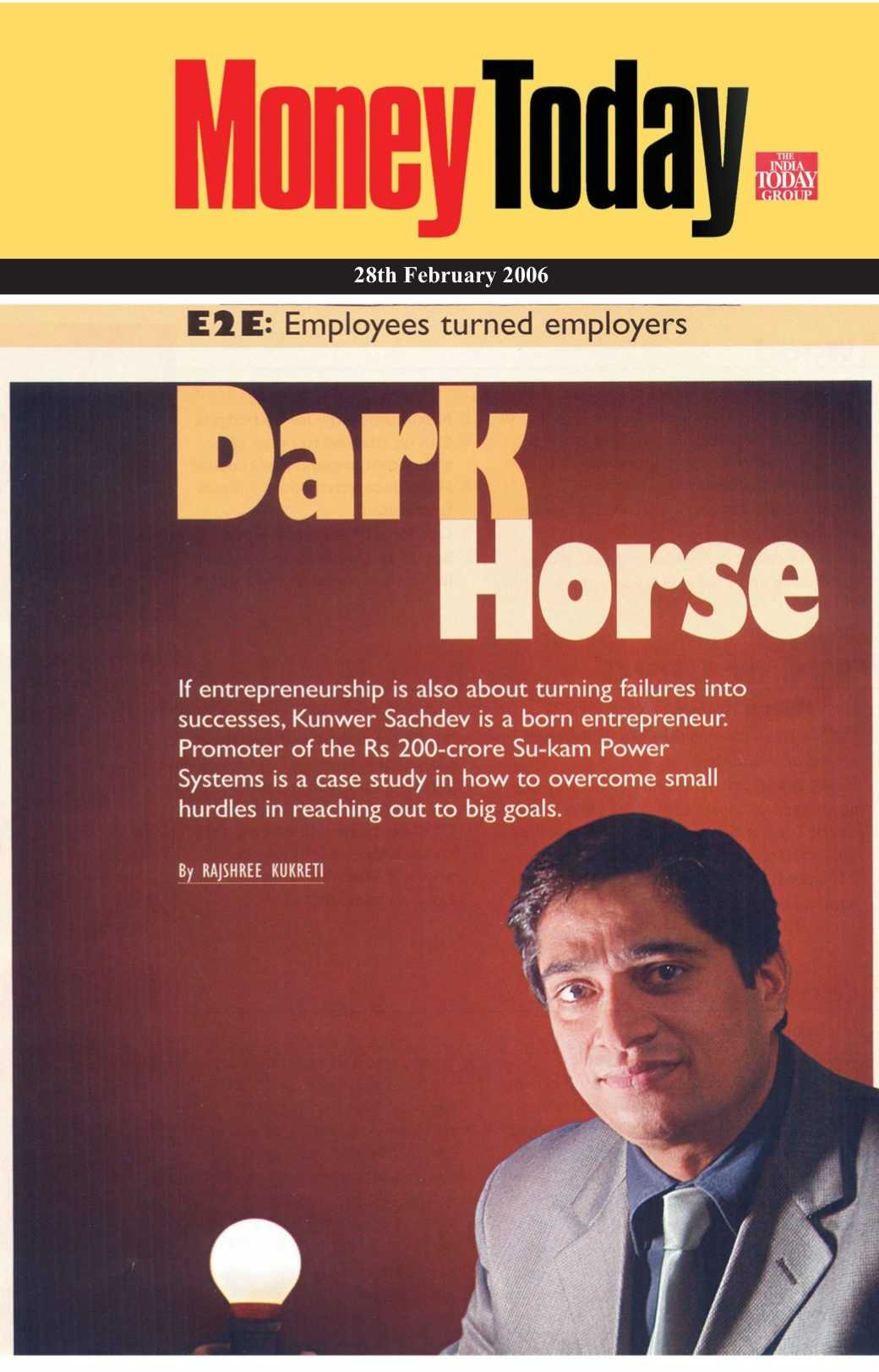
The result: By 2006, ₹200 crore revenue. Business Today called us "Dark Horse."
2006 · Category Leadership: Becoming the Trusted Brand
The competition problem: By 2006, competitors were copying our plastic-body design. The market was crowded. We could compete on price or move to trust. We chose trust.
Power on Wheels: We built India's first 100 kVA inverter and mounted it on a truck. Toured every state. Ran banquet halls, marriage processions, disaster-relief camps and telecom shelters on pure-sine-wave inverter power. Not to show specs — to demonstrate real-world proof. Dealers watched. Customers heard. Trust grew.
The dealer-meet flywheel: Regional 2-day meets. 500+ dealers. Sales training + live demos + margin announcements. We treated dealers as partners in belief, not order-takers. Loyalty grew, competitor poaching got harder, and margins became easier to negotiate.
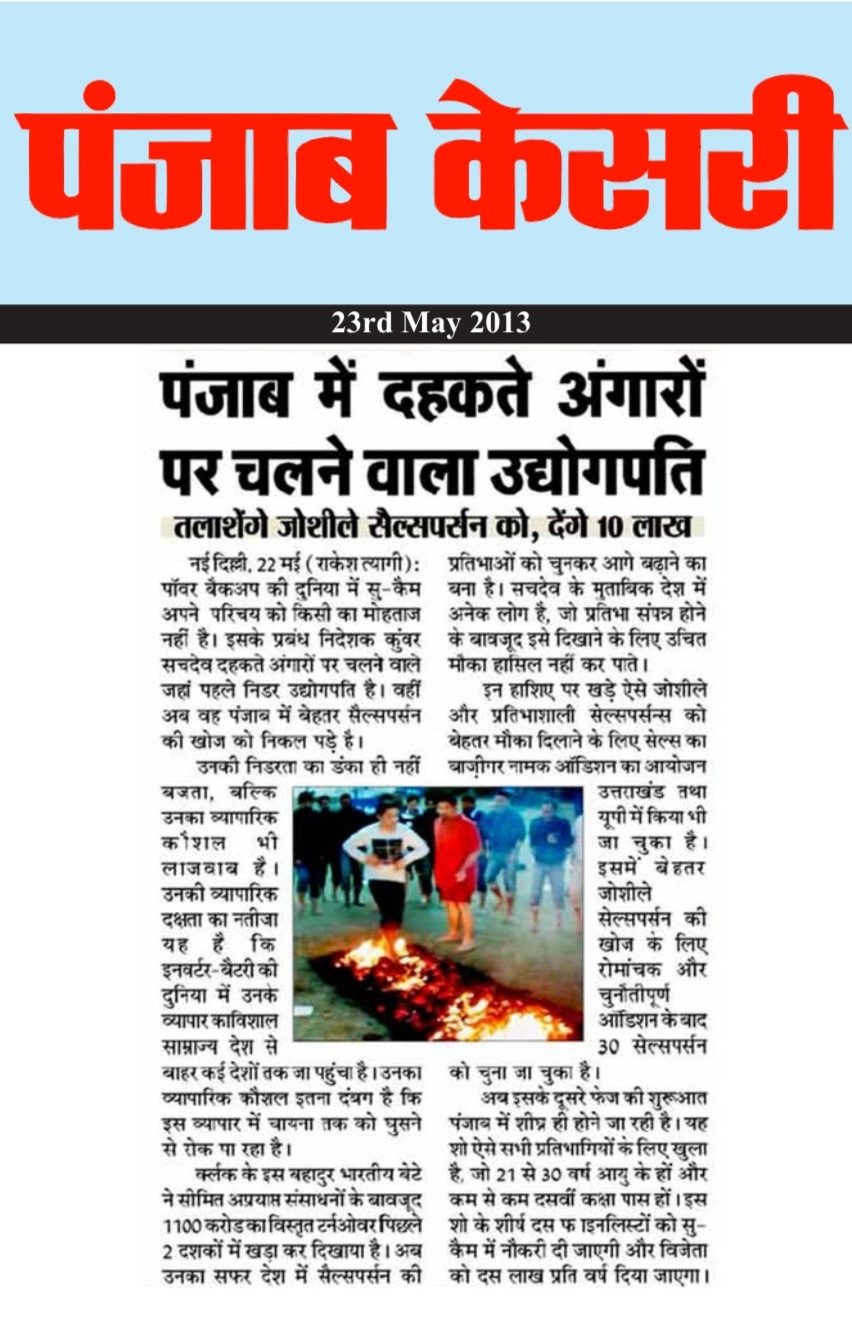
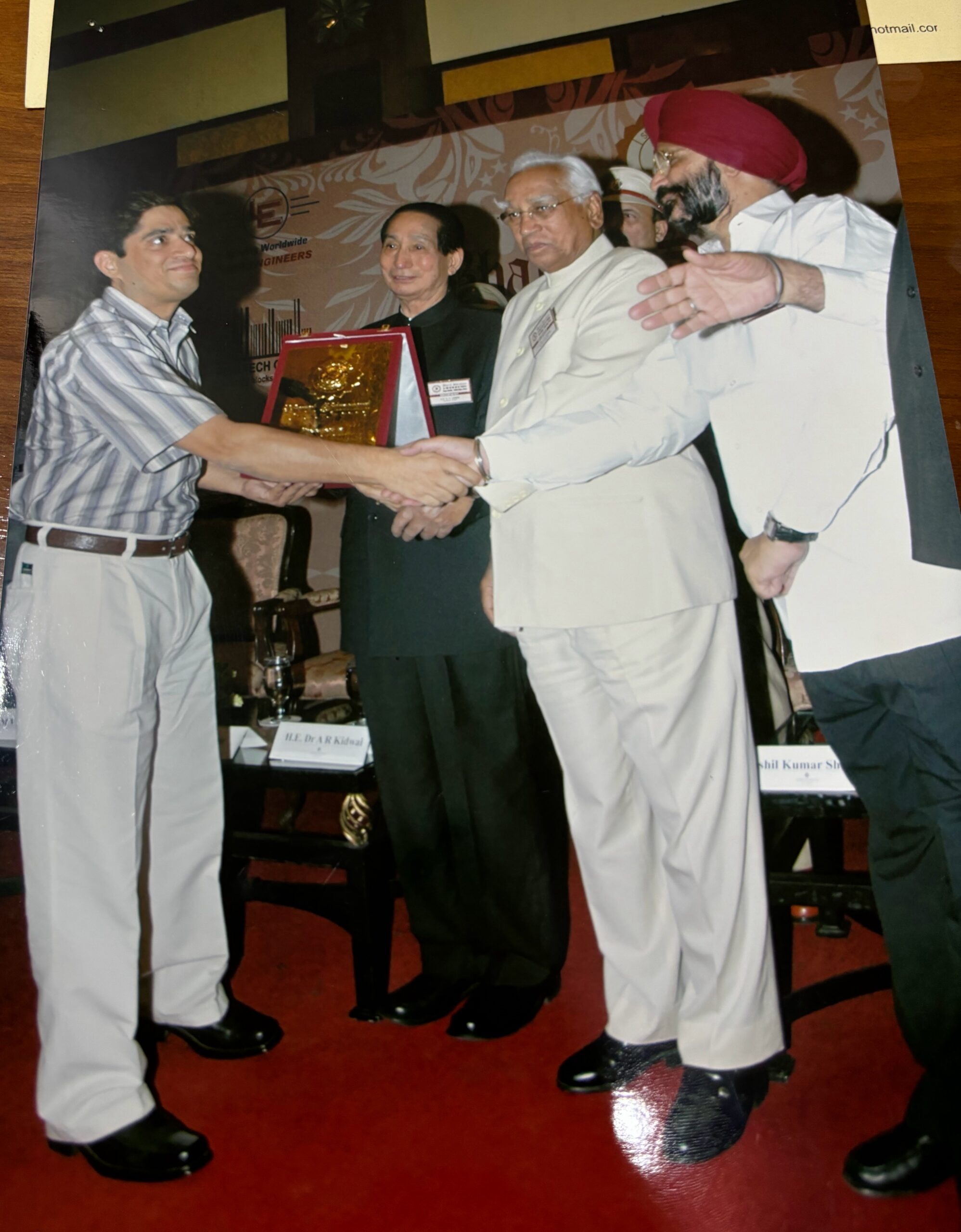
The awards: 2010 — India Today "Innovation of the Decade" (plastic inverter). 2011 — Ernst & Young "Entrepreneur of the Year." 2009-10 — ELCINA-EFY Award for Excellence in R&D. Innovation + trust + dealer belief = market leadership.
2013 · Solar Pivot: Positioning Before Policy
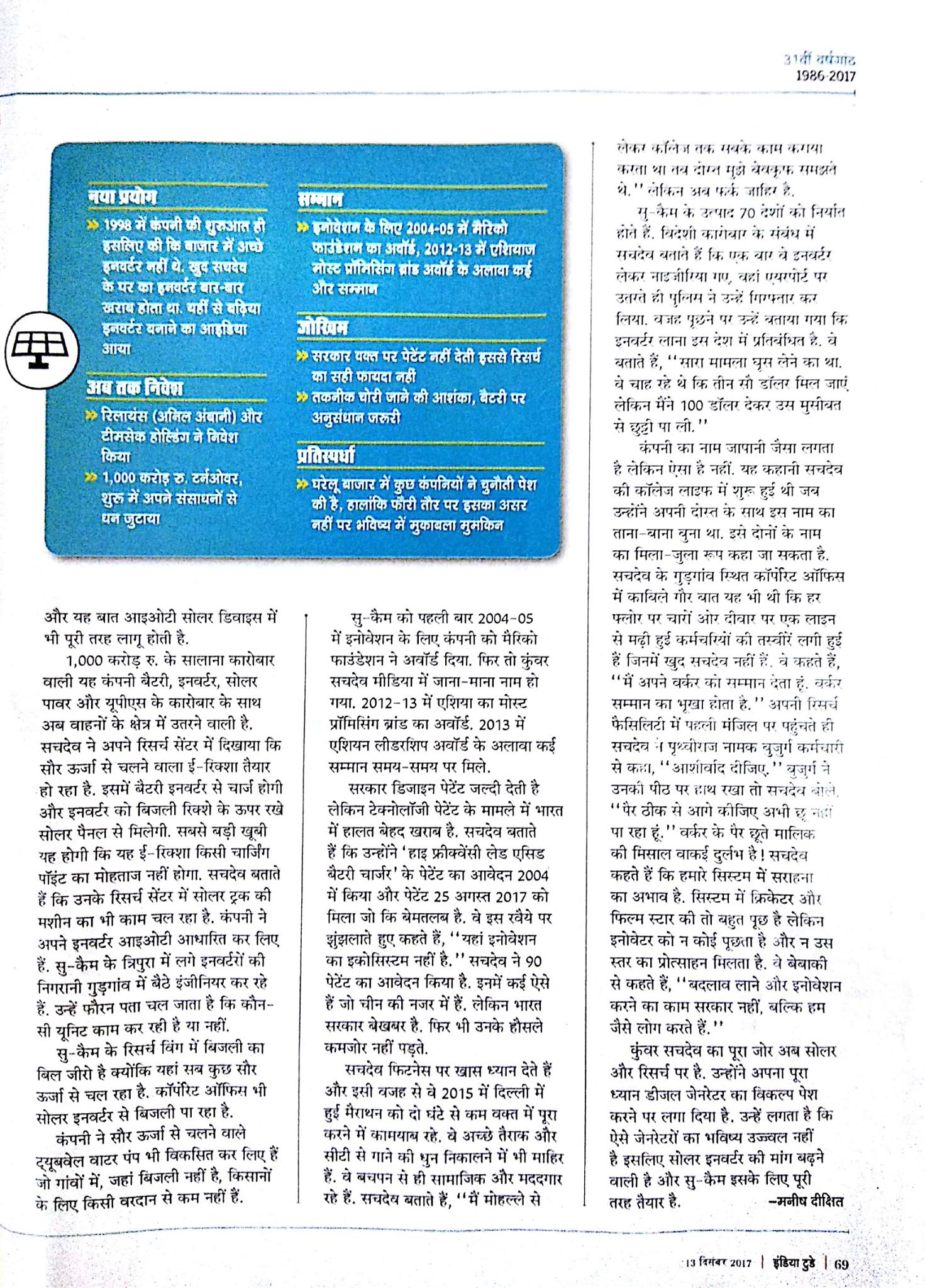
The insight: By 2013 we dominated inverters. But I saw the shift coming: solar. The government was starting to talk about renewable energy. Most competitors dismissed it as "too niche, too expensive." We built solar-hybrid inverters — the Brainy series — combining grid and solar power with intelligent priority settings.
The strategy: Not "we have solar technology," but "Position yourself for the next decade. Solar is coming. Become the expert dealer now." We showed dealers the financial models, warranty economics and margins, and moved them to belief in tomorrow — not today's market.
Solar PCU innovation: The first commercial 3-phase solar PCU — six years before national solar policy made it mainstream. That's operator wisdom: bet on what's coming, not what's here.
The result: By 2017, Su-Kam was valued at ₹1,200–2,300 crore — not despite solar, but because we positioned dealers and customers for a market others didn't yet see.
2011 · Awards & Global Expansion: Proof of Leadership
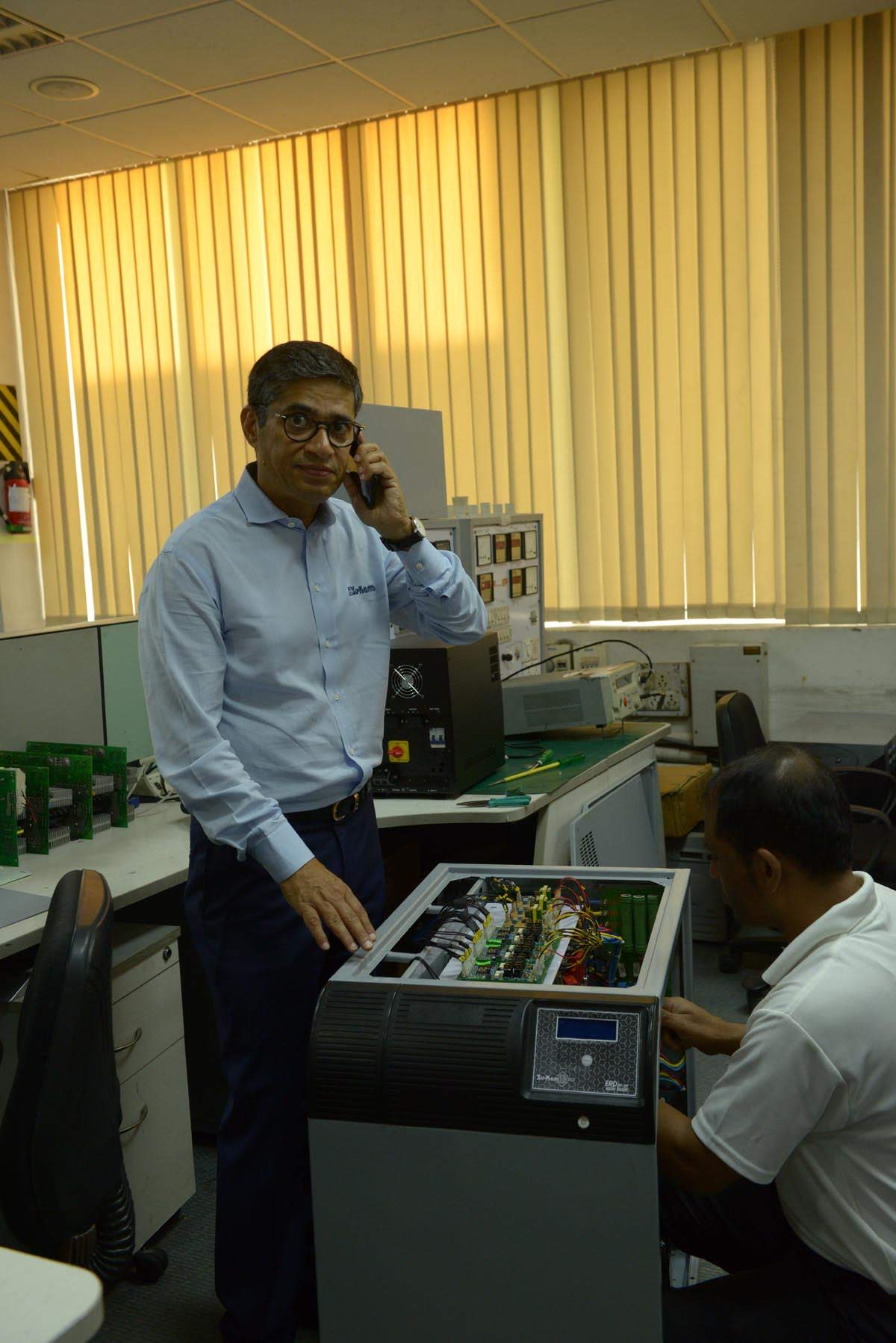
What recognition validated: Awards didn't create the business — they validated the strategy. "Entrepreneur of the Year" told dealers "this founder knows what he's doing." It gave new dealers confidence to take on Su-Kam, and proved we weren't just surviving — we were leading.
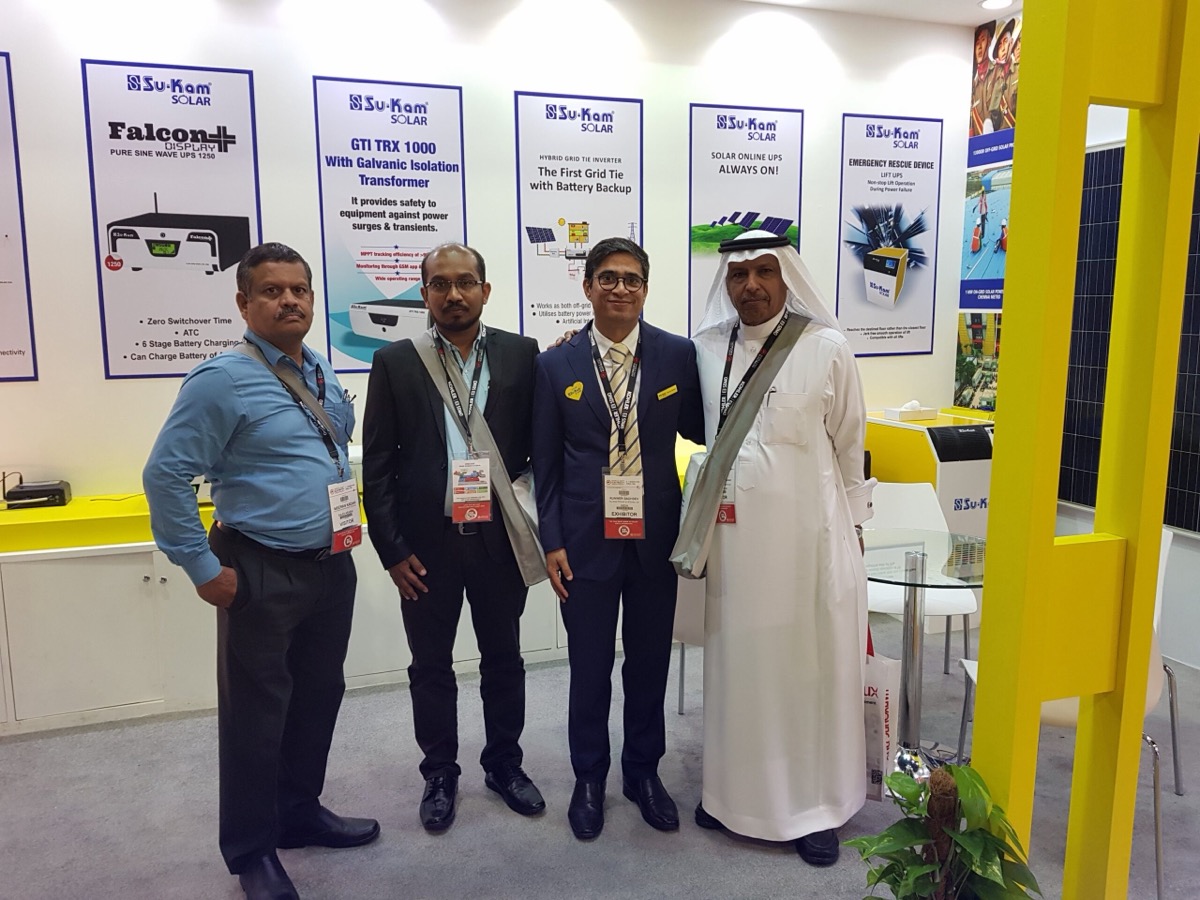
Global expansion: Su-Kam exported to 90+ countries across Africa, the GCC, Southeast Asia and Latin America. Each region needed different dealer relationships, warranty understanding and compliance strategy — but the same playbook: build dealer belief, prove the product works, position for their market's future.
2019 · Rebuild: Su-Vastika & The Second Chance
What the fall taught: Bankruptcy isn't a marketing failure — it's an operations failure. Su-Kam fell for reasons beyond marketing: debt structure, personal guarantees, NCLT proceedings. The lesson for founders: marketing can't save broken unit economics. It can only delay the fall.
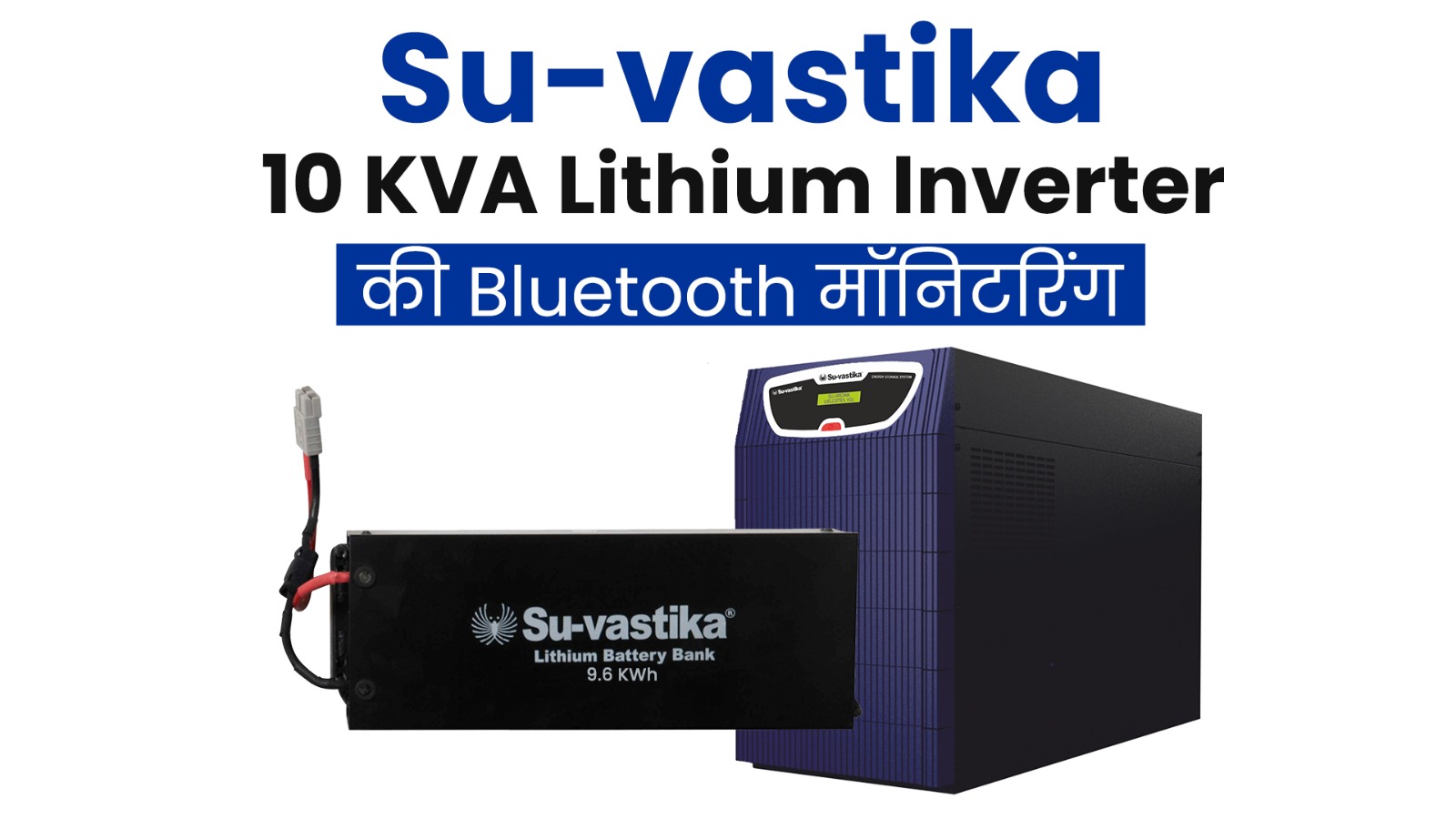
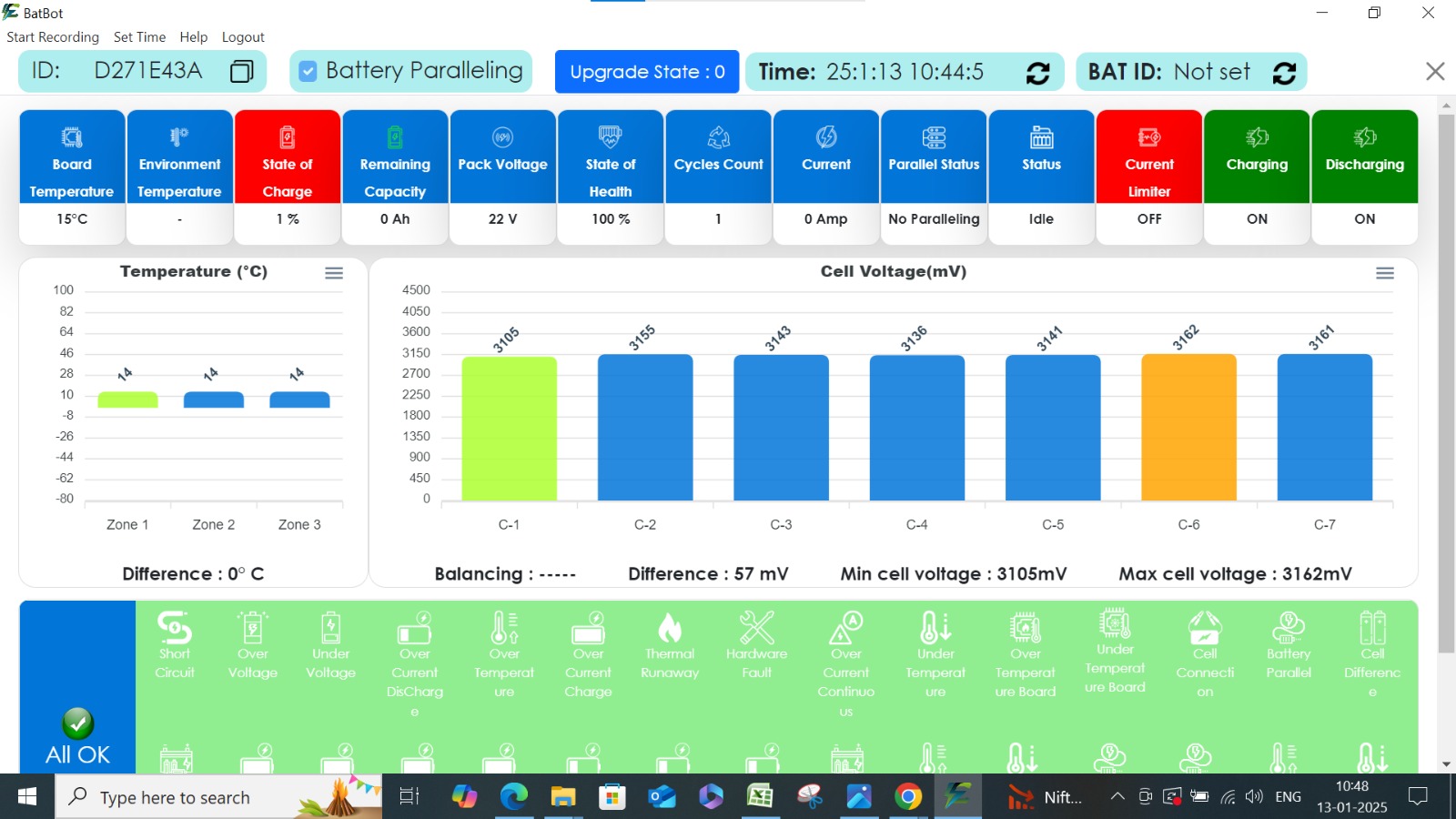
Su-Vastika's innovation: The world's first IoT-based paperless digital warranty. No receipt, no card — the warranty lives in the microprocessor, counts from first use, and is tracked real-time via app. It solves the trust problem at scale: the dealer keeps no records, the customer gets instant proof, the manufacturer knows exactly what's covered.
The marketing, refined: Not "we have IoT technology," but "Your warranty is now instant proof. Your dealer relationship just got stronger. Your customer's trust is real." Same playbook, sharper execution.
The Four Pillars — Now Encoded in the Marketing Engine
1. Trust, not reach. Dealers and customers decide on proof, not promises. Show the plastic is lighter. Show the warranty works. Show the margin. Demonstration beats advertising.
2. Dealers are partners. Train them. Involve them in category bets. Meet quarterly. Treat them as partners in belief, not order-takers. Their belief becomes the customer's belief.
3. Position for tomorrow. Position dealers for the future before the policy exists. We bet on solar six years before it went mainstream. Marketing is about moving belief to tomorrow.
4. Specificity over cleverness. "Power that works when nothing else does" beats "disruptive next-gen." Indian buyers decide on specifics — weight, warranty, margins, service. Give them that.